

This book is due to be released in August 2026, it is available on backorder.
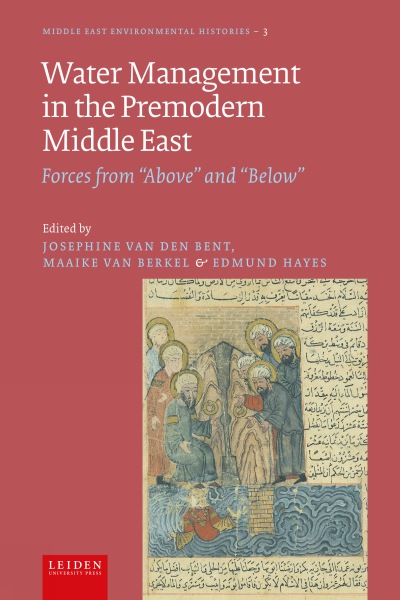
This volume analyses water management in pre-1500 Middle Eastern cities. Managing access to fresh water for large numbers of people has always been great challenge. Nevertheless, premodern societies of the Middle East and North Africa were rather successful in providing water to city dwellers, pilgrims and travellers in and around large and highly populated cities such as Cairo, Damascus, Baghdad, Samarra, Basra, and Medina. The contributions to this volume delve into the question of how this was accomplished by examining the intersection between social institutions and the physical reality of water use. These studies analyse the identity and interactions between many different players and stakeholders in water management in cities. Who was responsible for the building, management and maintenance of different elements in premodern waters systems? Who had access to that water? The volume focuses on the sometimes fraught relationships between forces from “above”—central authorities, formal institutions and elites—and forces from “below”— more informal practices within local communities.
This volume maps a wide variety of physical infrastructures related to water management to be found in densely populated or travelled areas. At the same time, it explores the multitude of social institutions which mediated the distribution of water to medieval urban and rural populaces. Thus, water management provides a microcosm for the wider mechanisms and evolutions of premodern urban governance and its interactions with rural hinterlands. By bringing together a wide range of scholars working on different aspects of these issues, in different contexts and at different times, this volume makes an important new contribution to our understanding of how water was distributed, regulated, and used by urban populations in premodern societies.
Josephine van den Bent is assistant professor of medieval history at the University of Amsterdam. Her research interests include ethnicity and ethnic stereotyping, urban organisation, and in general the social and cultural history of the premodern Islamicate world. She previously worked as a postdoctoral researcher on the NWO Vici-project “Source of Life” at Radboud University.
Maaike van Berkel is professor of medieval history at Radboud University, Nijmegen. She is a social and cultural historian of the Middle East, with a particular interest in court culture and urban history. Her current research project investigates water management in the premodern Middle Eastern city.
Edmund Hayes is a lecturer at Leiden University. His research focus is the social history of early Shiʿa Islam, which gave rise to his 2022 monograph, Agents of the Hidden Imam: Forging Twelver Shiʿism, 850-950 CE, and a 2024–2028 ERC project “Embodied Imamate: Mapping the Development of the Early Shiʿi Community 700–900 CE.”
Available on backorder