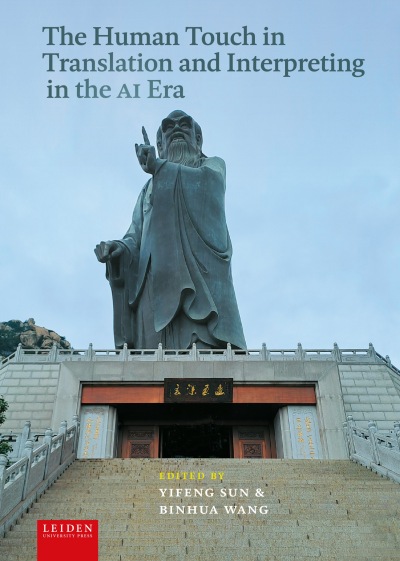
This book is due to be released January 2027. It is available on backorder.
Fluent translation is now easy to generate. The harder question is one that AI cannot answer on its own: who bears responsibility when meaning is produced by systems that cannot themselves be held accountable? Translation has never been just linguistic substitution. It is judgment under constraint, shaped by competing interests, with consequences that fall on real people. AI does not remove that human dimension — it makes questions of interpretive authority and professional accountability harder to sidestep.
This book responds to current scholarship by challenging the prevailing narrative of human obsolescence in translation and interpreting by foregrounding the enduring significance of human agency. It offers a distinctive contribution through its sustained focus on human creativity, ethics, and education in technologically mediated contexts of translation and interpreting. The nine chapters from translation studies, interpreting research, philosophy, and AI scholarship examine how creativity, ethics, professional agency, and pedagogy are being reshaped. The volume argues that human authority in translation is not merely a holdover from pre‑digital practice, but a defining condition of translation as an ethical, professional, and institutional activity. Neither technophobia nor uncritical adoption will serve the field. This book offers a clear‑eyed reckoning with what is at stake.
Yifeng Sun is Chair Professor of Translation Studies at the University of Macau and Editor-in-Chief of Babel: International Journal of Translation. His academic output includes seven monographs, five edited or co edited volumes, and more than 100 journal articles and book chapters in translation studies, comparative literature, and cross cultural communication.
Binhua Wang is Professor in the Department of Translation at Lingnan University in Hong Kong. Before 2026, he was Chair/Professor of interpreting and translation studies at the University of Leeds. His academic output includes several monographs, one edited volume, and many journal articles in interpreting and translation studies, digital humanities, and AI-human interactions in T&I.