This book is due to be published April 2027 but is now available on back order.
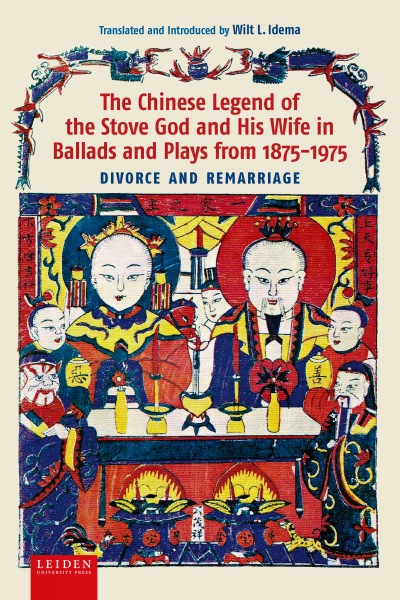
One popular Chinese legend of the stove god’s mortal life as Young Zhang tells the story of his marriage to Dingxiang, their divorce, and their later encounter when he has been reduced to begging and she has remarried and is living in comfort. When he is overcome by shame and commits suicide, she does so too, whereupon both are raised to divine rank by the Jade Emperor. This legend was widely adapted in long ballads and plays in premodern times. Following the establishment of the People’s Republic of China in 1949, such plays were modernized and revised in the 1950s to conform to the needs of the Land Reform Movement and of Marriage Reform: while Young Zhang is changed into an evil landlord, the divorced Dingxiang falls in love with an honest, hardworking and handsome poor peasant.
This volume illustrates this transformation of folklore through a selection of highly entertaining ballads and plays in complete translations.
Wilt L. Idema (b. 1944) taught Chinese Language and Literature at Leiden University (1970-1999) and Chinese Literature at Harvard University (1999-2013). His research is focused on the vernacular traditions of late-imperial times (fiction, drama, and storytelling). He has also published on Chinese women’s literature. Recent publications include The Metamorphosis of Tianxian pei: Local Opera under the Revolution (1949-1956) (Hong Kong: Chinese University Press, 2015) and The Kitchen God and His Wives: A Modern Chinese Folk Epic (Ithaca: Cornell University Press, 2025).